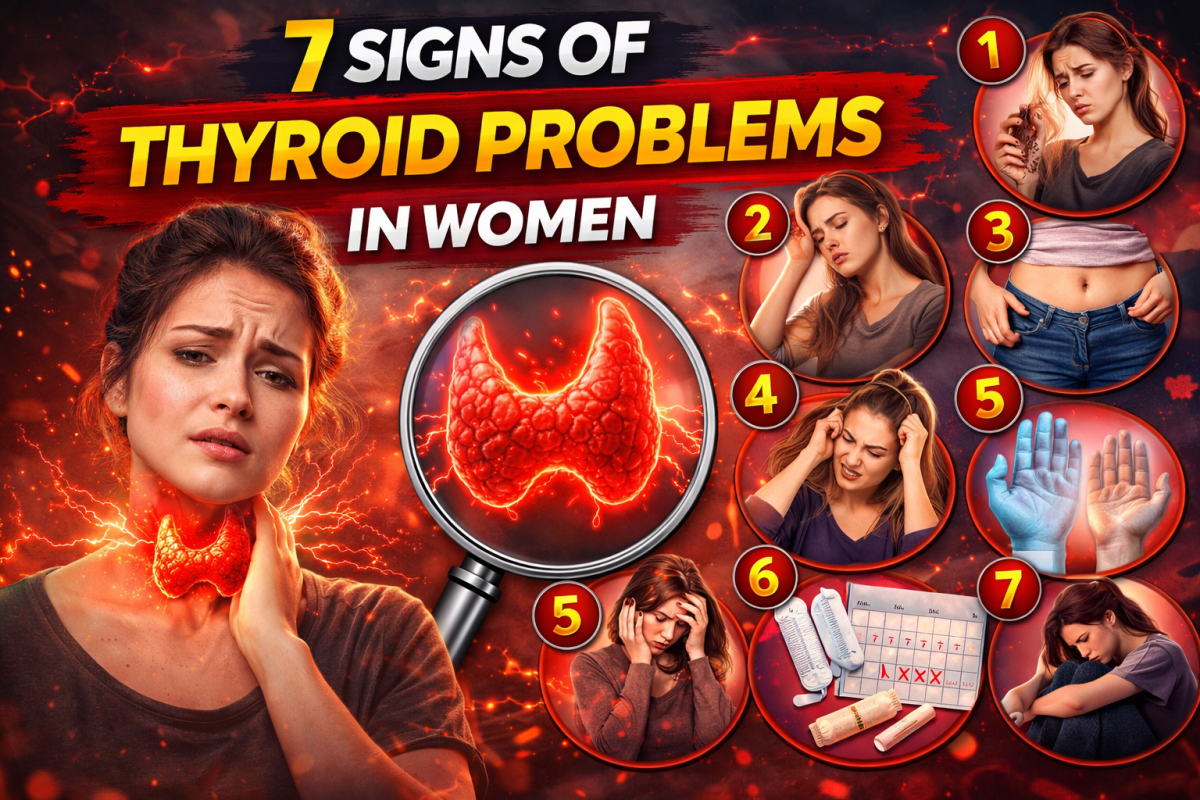
Thyroid problems affect millions of women across the United States, yet many go undiagnosed for years. The thyroid is a small, butterfly-shaped gland in your neck that produces hormones regulating metabolism, energy, heart rate, and even mood. When it malfunctions—producing too little hormone (hypothyroidism) or too much (hyperthyroidism)—it can trigger a cascade of symptoms that feel like “normal” aging or stress.
Women are five to eight times more likely than men to develop thyroid disease, according to the American Thyroid Association. In fact, one in eight women will face a thyroid disorder in her lifetime. Up to 60% of people with thyroid issues don’t even know they have them. Early detection matters because untreated thyroid problems raise risks for heart disease, infertility, osteoporosis, and complications during pregnancy.
In this comprehensive guide, we break down the 7 most common signs of thyroid problems in women. You’ll learn exactly what each symptom feels like, why it happens, how it differs between hypothyroidism and hyperthyroidism, and what to do next. If you recognize yourself in these descriptions, schedule a simple blood test with your doctor.
1. Persistent Fatigue and Low Energy
One of the earliest and most common signs of thyroid problems in women is crushing fatigue that doesn’t improve with rest. You sleep eight hours yet wake up exhausted. Simple tasks like grocery shopping leave you drained.
In hypothyroidism, low thyroid hormone slows your metabolism, leaving cells starved for energy. Hyperthyroidism can also cause fatigue because your body is in overdrive and eventually burns out. Women often dismiss this as “mom fatigue” or perimenopause, but it’s a classic red flag.
According to the Mayo Clinic, this tiredness is different from everyday exhaustion—it feels deep and unrelenting. Many women report brain fog alongside it, struggling to concentrate at work or remember appointments. If fatigue persists for weeks despite good sleep and diet, ask your doctor to check your TSH levels.
2. Unexplained Weight Changes
Sudden weight gain or loss without changes in diet or exercise is a hallmark of thyroid dysfunction.
Hypothyroidism slows metabolism, causing the body to store fat and leading to stubborn weight gain—often 5–10 pounds or more in a short time. You may notice puffiness in the face or fluid retention. Conversely, hyperthyroidism revs metabolism, so you lose weight rapidly even while eating more.
Women in their 30s and 40s frequently blame these shifts on aging or hormones, but thyroid imbalance is often the culprit. The American Thyroid Association notes that unexplained weight fluctuations affect millions of women annually. Track your weight alongside other symptoms and mention it during your next check-up.
3. Hair Loss, Thinning Hair, or Brittle Hair
Noticing more hair in the shower drain or thinning eyebrows (especially the outer third) can signal thyroid trouble. Hypothyroidism causes dry, brittle, thinning hair and slowed growth. Hyperthyroidism may lead to fine, fragile hair that falls out easily.
Thyroid hormones regulate hair follicles. When levels are off, follicles enter a resting phase prematurely. Many women first spot this change during routine styling and panic, thinking it’s stress or nutritional deficiency. In reality, it’s one of the most visible signs of thyroid problems in women. The Mayo Clinic confirms that hair changes often accompany dry skin and can improve with proper treatment.
4. Mood Changes: Depression, Anxiety, or Irritability
Thyroid hormones directly influence brain chemistry. Hypothyroidism often triggers depression, low mood, and difficulty concentrating—sometimes misdiagnosed as clinical depression. Hyperthyroidism frequently causes anxiety, irritability, nervousness, and even panic attacks.
Women are already at higher risk for mood disorders due to hormonal fluctuations across life stages. When thyroid disease overlaps, symptoms intensify. You might feel weepy, unmotivated, or on edge for no clear reason. The Office on Women’s Health notes that these mood swings can mimic menopause or postpartum changes, making diagnosis tricky. A simple blood panel can rule out thyroid involvement.
5. Sensitivity to Temperature
Feeling unusually cold when everyone else is comfortable? That’s classic hypothyroidism—your slowed metabolism reduces heat production. Women often layer up in summer or notice cold hands and feet.
Hyperthyroidism does the opposite: you feel hot, sweat excessively, and can’t tolerate warm rooms. Night sweats or clammy skin may appear. This temperature intolerance is one of the most specific signs of thyroid problems in women because it stems directly from metabolic changes.
6. Irregular or Heavy Menstrual Periods
Thyroid disease disrupts the delicate balance of reproductive hormones. Hypothyroidism often causes heavier, longer, or more painful periods and can lead to irregular cycles or missed periods. Hyperthyroidism may shorten cycles or make them lighter.
The Office on Women’s Health explains that thyroid imbalance affects ovulation, raising risks of infertility and early menopause. Women trying to conceive often discover thyroid issues only after months of unsuccessful attempts. If your periods have changed dramatically—especially alongside fatigue or weight shifts—talk to your gynecologist or endocrinologist.
7. Dry Skin, Brittle Nails, and Other Skin Changes
Dry, flaky skin that doesn’t improve with moisturizer, brittle or ridged nails, and slow-healing cuts are common in hypothyroidism. Hyperthyroidism can cause warm, moist skin or itchiness.
Thyroid hormones regulate skin cell turnover and oil production. When levels drop, skin becomes dry and nails crack. Women notice these changes on hands, elbows, and heels first. The American Academy of Dermatology lists these as key visible clues that prompt many patients to seek care.
Why Women Face Higher Risk and What Causes Thyroid Problems
Women’s immune systems are more prone to autoimmune attacks—the leading cause of both Hashimoto’s (hypothyroidism) and Graves’ disease (hyperthyroidism). Other triggers include pregnancy, postpartum thyroiditis (affecting 10% of new moms), iodine imbalance, radiation, certain medications, and family history.
Pregnancy hormones increase thyroid demand, raising risks of miscarriage, preterm birth, and developmental issues in babies if untreated. Post-menopause, symptoms may be mistaken for normal aging.
How Doctors Diagnose Thyroid Problems
Diagnosis starts with a simple blood test measuring TSH, free T4, and sometimes T3 and thyroid antibodies. Your doctor may also perform a physical exam for goiter or order an ultrasound. Early testing is crucial—especially if you have family history or symptoms.
Treatment Options That Work
Most thyroid conditions are highly treatable. Hypothyroidism usually requires daily levothyroxine to replace missing hormone. Hyperthyroidism may need anti-thyroid drugs, radioactive iodine, or surgery. Regular monitoring keeps levels balanced. Lifestyle changes—balanced diet rich in selenium and zinc, stress management, and avoiding excess iodine—support recovery.
With proper treatment, most women regain energy, stabilize weight, and restore normal cycles within weeks to months.
When to See a Doctor
Don’t wait if you notice two or more of these 7 signs persisting for weeks. Contact your primary care provider or an endocrinologist for a thyroid panel. Early intervention prevents complications like heart disease, osteoporosis, and fertility struggles.
Conclusion
Thyroid problems in women are common but highly manageable. Recognizing these 7 signs—fatigue, weight changes, hair loss, mood shifts, temperature sensitivity, menstrual irregularities, and skin/nail changes—can be life-changing. If you suspect an issue, get tested. Knowledge and prompt care empower you to feel like yourself again.
Share this article with friends and family who may be experiencing similar symptoms. Your awareness could help another woman catch her thyroid problem early.



Comments (0)
Loading comments...