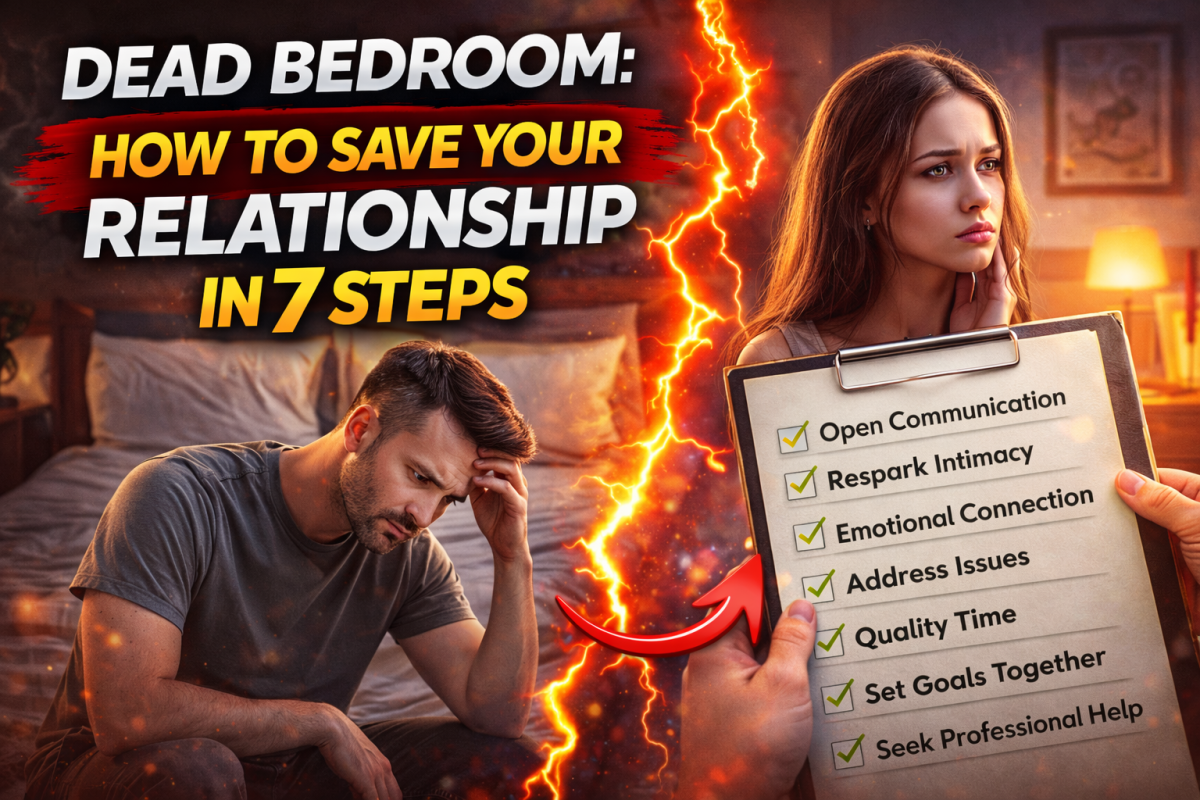
Dead bedroom. It is a phrase that strikes fear into the heart of any long-term couple. Have you ever felt like you and your partner have seamlessly transitioned from passionate, can't-keep-your-hands-off-each-other lovers to highly efficient, well-behaved roommates? You probably know the exact drill: you pass each other in the hallway, exchange a polite nod about the grocery list, maybe share a quick, obligatory peck on the cheek, and then retreat to opposite sides of the bed to scroll endlessly through your phones until you fall asleep. It is an incredibly lonely place to be, especially when you are lying right next to the person you love.
As someone who spends my days writing articles about relationships, sexuality, and the complex ways we connect, I can assure you that you are far from alone in this struggle. The dead bedroom phenomenon is one of the most common—yet deeply hushed—issues in modern partnerships. It is frustrating, it is confusing, but most importantly, it is highly treatable.
If the fire has faded into a faint ember, do not panic. Bringing intimacy back requires effort, a touch of vulnerability, and a bit of strategic planning. Let's dive into the seven essential steps to save your relationship and revive your physical connection.
1. Open the Dialogue Without the Blame Game
The very first step to fixing a dead bedroom is talking about it, which is often the hardest part. When we feel rejected or disconnected, our immediate defense mechanism is usually to point fingers. However, approaching your partner with accusations ("You never want to touch me anymore!") will instantly trigger a defensive response, shutting down any productive conversation.
Instead, you need to reframe the narrative using "I" statements. Focus on your own feelings and your shared goals. A practical example would be saying, "I have been feeling really disconnected from you lately, and I miss the physical closeness we used to share. Can we talk about how we can find our way back to each other?" This approach transforms a potential argument into a collaborative problem-solving session. You are a team tackling a problem, not adversaries fighting each other.
2. Rebuild the Foundation of Non-Sexual Touch
When a bedroom goes quiet, couples often stop touching entirely. The partner with the higher drive stops initiating to avoid the sting of rejection, while the partner with the lower drive avoids touch out of fear that a simple hug will be interpreted as a demand for sex. This creates a physical chasm.
To bridge this gap, you must intentionally reintroduce non-sexual touch. This means holding hands while watching TV, hugging greeting each other, or offering a gentle shoulder massage without any ulterior motives. Physical touch releases oxytocin, the bonding hormone, which helps foster feelings of safety and affection. By removing the pressure of performance, you allow physical closeness to feel comfortable and natural once again.
3. Dare to Put Intimacy on the Calendar
I know exactly what you are thinking: scheduling intimacy sounds about as romantic as scheduling a dental cleaning. We are conditioned to believe that passion must be entirely spontaneous to be genuine. But let’s be realistic—between demanding careers, managing a household, and the general exhaustion of daily life, waiting for the stars to perfectly align is a recipe for an indefinite dry spell.
Scheduling intimacy doesn't mean you have to be robotic. It simply means you are carving out dedicated, uninterrupted time for each other. Think of it as creating an environment where spontaneity has the permission to happen. Knowing that Saturday night is "your night" allows both partners to build mental anticipation throughout the week, which is a massive component of desire.
4. Audit Your Lifestyle and Stress Levels
Our bodies are remarkably intelligent; they know that when we are running on fumes, reproduction and recreation are not top priorities. Chronic stress, poor diet, lack of sleep, and underlying mental health struggles are notorious libido killers.
Take a step back and evaluate what is happening outside the bedroom. Are you both working seventy-hour weeks? Is anxiety running rampant? According to resources from the American Psychological Association, chronic stress directly interferes with hormone production and emotional availability. Sometimes, fixing a dead bedroom starts with taking a walk, getting eight hours of sleep, or managing work-related burnout.
5. Prioritize Emotional Connection First
You cannot expect fireworks in the bedroom if there is ice in the living room. For many people, particularly women, physical desire is deeply tethered to emotional intimacy. If you feel unheard, unappreciated, or emotionally distant from your partner, your body is unlikely to crave physical closeness.
Start dating each other again. Ask open-ended questions that go beyond "How was work?" Spend time understanding your partner's current hopes, fears, and dreams. The experts at The Gottman Institute heavily emphasize the importance of updating your "Love Maps"—your knowledge of your partner's internal world. When you feel emotionally cherished and understood, physical intimacy naturally follows as an extension of that profound connection.
6. Reintroduce Novelty and Playfulness
Routine is the enemy of eroticism. When you have been with someone for years, you know exactly what they are going to do, how they are going to do it, and how long it will take. While there is a beautiful comfort in that predictability, it doesn't exactly get the heart racing.
To reignite the spark, you have to introduce novelty. This doesn't necessarily mean you need to swing from the chandeliers (unless you want to). It can be as simple as changing the environment—booking a hotel room for the night, lighting different candles, or trying a new activity together that gets your adrenaline pumping. Trying new things together creates a shared vulnerability and excitement that easily translates into renewed physical passion.
7. Know When to Call in the Professionals
There is absolutely no shame in admitting that you are stuck and need a roadmap. If you have tried communicating, scheduling, and reconnecting, but the wall between you remains insurmountable, it is time to seek professional guidance.
A certified sex therapist or couples counselor can help you unpack deeply ingrained resentments, biological hurdles, or psychological blocks that are preventing intimacy. Organizations like the American Association of Sexuality Educators, Counselors and Therapists (AASECT) can connect you with qualified professionals who specialize in these exact dynamics. Therapy is an investment in your shared happiness, providing you with tailored tools to rebuild your bond.
Frequently Asked Questions (FAQs)
What officially qualifies as a dead bedroom?
Clinically, a sexless marriage or "dead bedroom" is often defined as having sexual intimacy fewer than 10 times a year. However, realistically, a dead bedroom is any situation where a significant, persistent mismatch in sexual desire causes ongoing distress, resentment, and a profound feeling of disconnection between partners.
Can a dead bedroom actually be fixed?
Yes, a dead bedroom can absolutely be fixed. The most crucial factor is that both partners must be willing to acknowledge the problem and actively participate in finding a solution. With open communication, empathy, and sometimes professional guidance, many couples successfully rebuild robust and fulfilling intimate lives.
How long does it take to fix a dead bedroom?
There is no overnight fix. Healing a dead bedroom generally takes anywhere from a few months to over a year. It depends on how long the issue has persisted, underlying resentments, and the consistency of your efforts. Patience is vital; focus on celebrating small victories and incremental improvements in closeness.



Comments (0)
Loading comments...