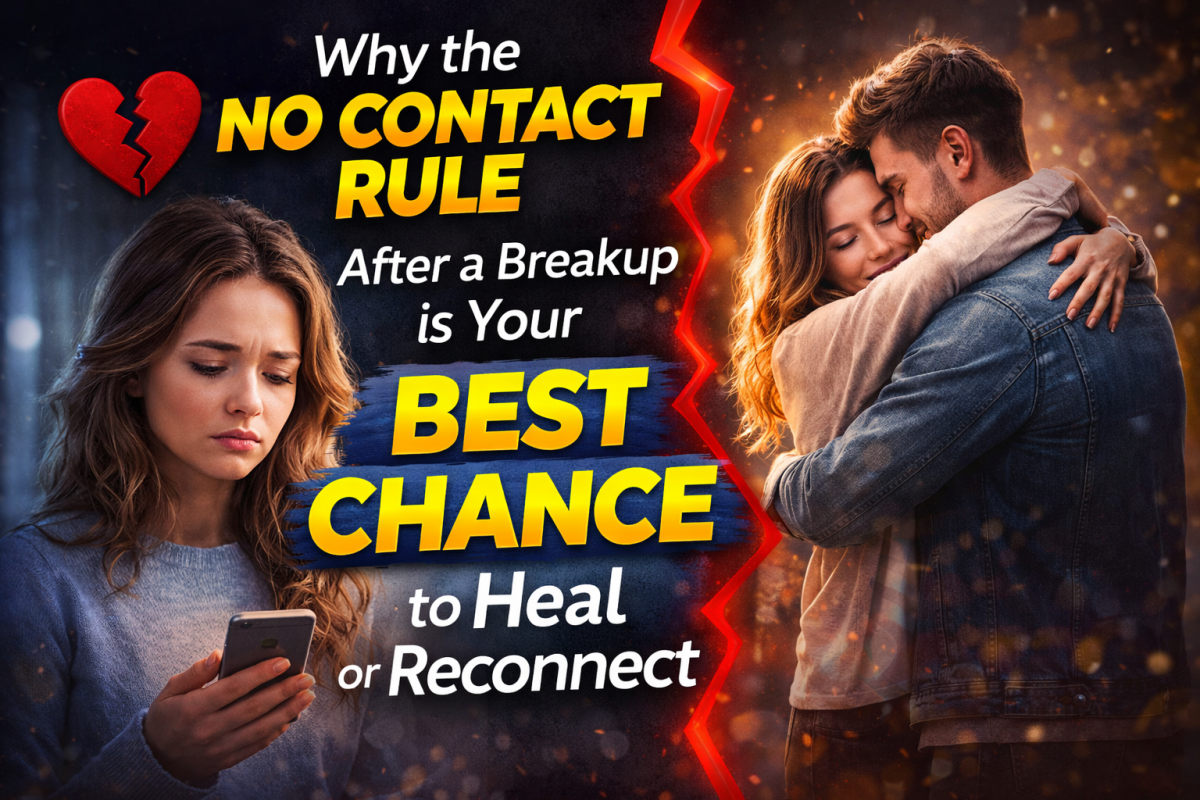
You ever felt like you're scrolling through your ex's Instagram at 2 a.m., heart racing, wondering if that new story is a subtle dig at you? Or maybe you're replaying that last fight in your head, convinced one more text could fix everything? Girl, I've been there—curled up with a pint of ice cream, phone in hand, debating whether to hit "send." As someone who's navigated her share of messy breakups, let me tell you: that impulse is totally normal, but it's also a trap. Enter the no contact rule after a breakup—the ultimate glow-up strategy that gives you space to breathe, heal, or maybe even reconnect on better terms. It's not about playing games; it's about reclaiming your power. Stick with me, and I'll break it down with real talk, expert-backed insights, and some laugh-out-loud examples to keep things light.
What Exactly Is the No Contact Rule After a Breakup?
Let's start with the basics, shall we? The no contact rule after a breakup means zero communication with your ex—no texts, calls, social media stalks, or "accidental" run-ins at your favorite coffee spot. We're talking full radio silence for a set period, usually 30 to 60 days, though it can vary based on your situation. Why? Because constant contact keeps the emotional wounds fresh, like picking at a scab that just won't heal.
According to relationship experts at The Gottman Institute, healthy relationships thrive on emotional regulation and space, and post-breakup, that space is crucial for processing feelings without interference. Think of it as a detox for your heart—flushing out the drama so you can see clearly. And hey, if you're wondering about the science, a study from the Mayo Clinic on stress management highlights how reducing triggers like ex-interactions lowers cortisol levels, making you feel calmer and more in control. It's not just fluffy advice; it's backed by real pros.
But let's make it fun: Imagine your ex as that addictive Netflix show you binge-watched. Hitting pause (or cancel) gives you time to catch up on your own life episodes. Practical example? Sarah, a 28-year-old from New York, implemented no contact after her two-year relationship ended. She blocked her ex everywhere and focused on yoga classes instead. Within weeks, she felt empowered, not obsessed. That's the magic we're chasing here.
The Healing Power of the No Contact Rule After a Breakup
Okay, let's dive into why the no contact rule after a breakup is your VIP ticket to emotional healing. First off, it creates distance from the pain. Without daily reminders, you stop reliving the breakup loop—the "what ifs" and "should haves." Instead, you redirect that energy inward.
Experts from Women's Health often discuss how breakups mimic grief stages, and no contact accelerates moving from denial to acceptance. A piece in the New York Times on modern relationships notes that space allows for neuroplasticity—your brain rewires to form new habits without the ex-anchor. Fun fact: Research from PubMed (via NCBI studies on attachment theory) shows that avoiding ex-contact reduces anxiety symptoms by up to 40% in the first month.
Picture this practical scenario: You're fresh out of a breakup, and every notification makes your stomach drop. By going no contact, you swap doom-scrolling for self-care rituals. Take Mia from LA—she used her 45-day no contact period to journal daily, hike with friends, and even learn guitar. "It was like rediscovering myself," she says. Suddenly, hobbies that got sidelined during the relationship bloomed, boosting her confidence. And let's be real, nothing says "healing" like belting out empowerment anthems in your living room.
But it's not all rainbows; expect withdrawal symptoms like loneliness spikes. That's normal! A tip from Cosmopolitan: Lean on your squad—schedule girls' nights or virtual hangs to fill the void. Over time, this rule rebuilds your self-esteem, turning "I miss them" into "I'm thriving without them." If healing is your goal, no contact isn't just helpful—it's essential.
Can the No Contact Rule Help You Reconnect After a Breakup?
Now, for the plot twist: What if you want to reconnect after a breakup? Surprisingly, the no contact rule can be your stealthy ally here too. By stepping back, you give both parties time to reflect, miss each other, and grow. It's like hitting the reset button on a glitchy app—sometimes, a full shutdown fixes the bugs.
Insights from Men's Health suggest that absence can reignite attraction, as it disrupts the familiarity that bred contempt. A study referenced in Science on human behavior shows that scarcity increases perceived value—your ex might start seeing you as the one that got away. But warning: This only works if the breakup wasn't toxic. Per The Gottman Institute, reconnection requires mutual respect, which no contact tests.
Hypothetical example time: Meet Alex and Jordan, who split after constant arguments. Alex initiated no contact for 60 days, using it to work on communication skills via therapy. When they reconnected (organically, at a mutual friend's event), Jordan noticed the changes. "It felt fresh," Alex recalls. They rebuilt slowly, with boundaries. Pro tip: If reconnecting, don't break no contact prematurely—patience is key. Track your progress in a journal to stay accountable.
Of course, reconnection isn't guaranteed. If they don't reach out, that's closure in disguise. But by focusing on your growth during no contact, you're either healing solo or setting up for a stronger Round 2. Either way, you win.
Practical Tips to Implement the No Contact Rule After a Breakup
Ready to roll up your sleeves? Implementing the no contact rule after a breakup takes grit, but I've got your back with actionable, fun steps. First: Block and delete. Yes, everywhere—phone, socials, even email if needed. It's not petty; it's protective.
From Mayo Clinic advice on mental health, setting boundaries reduces relapse risks. Next, set a timeline—start with 30 days and extend if you're not ready. Use apps like Forest to block distractions during weak moments.
Practical example: Emily from Chicago turned no contact into a "me-month" challenge. She created a vision board of goals—travel, fitness, career—and checked off items weekly. When temptation hit, she'd blast a breakup playlist (think Taylor Swift vibes) and dance it out. Result? She healed faster and felt badass.
Handle mutual friends gracefully: Politely ask them not to share updates. And if you slip? Forgive yourself—it's human. A PubMed study on habit formation says consistency builds over time. Track urges in a notes app to spot patterns.
For reconnection hopefuls: Use the time for self-improvement. Read books like "Attached" or join online forums. When (if) contact resumes, keep it light—no deep dives into past drama. Remember, no contact isn't manipulation; it's self-respect.
Common Pitfalls and How to Avoid Them
Even with the best intentions, the no contact rule after a breakup has traps. One biggie: The "just checking in" text. Spoiler: It's never just that. It resets your healing clock.
Women's Health warns against this, as it prolongs attachment. Solution? Have an accountability buddy—text them instead.
Another pitfall: Stalking via fake accounts. Guilty? We all are at some point. But Cosmopolitan calls it emotional sabotage. Delete apps temporarily if needed.
Practical scenario: Tom tried no contact but caved after seeing his ex's post. Heartbroken anew, he recommitted with a phone detox box (yes, literally). Two months later, he was dating again, lessons learned.
Stay vigilant against hoovering—when exes breadcrumb to pull you back. Recognize it, block harder. With these dodges, you're golden.
Long-Term Benefits Beyond the Breakup
The no contact rule after a breakup isn't a quick fix; it's a life skill. It teaches resilience, setting you up for healthier future relationships.
Per The Gottman Institute, mastering emotional independence predicts relationship success. A New York Times article on personal growth post-heartbreak links it to career boosts and stronger friendships.
Example: After no contact, Lena from Texas pivoted to entrepreneurship, launching a blog on self-love. "It transformed me," she shares. You'll emerge wiser, with boundaries like a boss.
In essence, whether healing or reconnecting, this rule empowers you. You've got this—heart mended, ready for whatever comes next.
Frequently Asked Questions (FAQs)
What is the no contact rule after a breakup?
The no contact rule after a breakup involves cutting all communication with your ex to foster healing or potential reconnection. It typically lasts 30-60 days, allowing emotional detox and self-growth. Backed by experts like the Mayo Clinic, it reduces stress and promotes clarity, helping you rebuild independently or on stronger terms.
How long should no contact last to reconnect?
For reconnection, aim for 30-90 days of no contact after a breakup, depending on relationship dynamics. This period lets both parties reflect and grow, increasing attraction through absence. Studies from PubMed suggest longer breaks yield better outcomes, but only resume contact if mutual interest shows—focus on your progress first.
Does the no contact rule work on everyone?
The no contact rule after a breakup works for most by aiding healing, but results vary by individual and relationship type. It's effective for self-recovery per Women's Health insights, though not foolproof for reconnection if issues were deep-rooted. Success hinges on commitment; toxic dynamics may require professional therapy for lasting change.


Comments (0)
Loading comments...